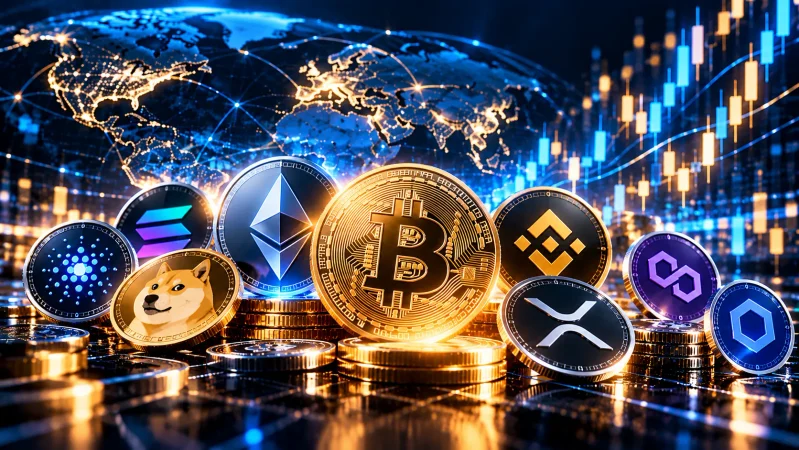
Bitcoin may be the best-known cryptocurrency, but altcoins and other digital assets extend the ecosystem far beyond Bitcoin.
Thousands of other digital assets have been created for different purposes, including payments, decentralized applications, blockchain networks, governance and digital ownership.
What Are Altcoins?
The term altcoin generally refers to cryptocurrencies other than Bitcoin.
Some altcoins operate on their own blockchain networks, while others are created as tokens on existing blockchains.
Ethereum, for example, has its own blockchain network and its native asset is ETH. Other projects use Ethereum or other blockchain platforms to create their own tokens.
What Are Digital Assets?
Digital assets are digital representations of value or ownership that can be stored, transferred or managed electronically.
Cryptocurrencies are one type of digital asset.
Other examples can include blockchain-based tokens, digital collectibles and certain forms of tokenized assets.
The exact function of a digital asset depends on the technology and system behind it.
How Are Altcoins Different From Bitcoin?
Bitcoin was designed primarily as a decentralized digital form of money.
Other blockchain projects may have different goals.
Some focus on smart contracts and decentralized applications. Others are designed for faster transactions, specialized blockchain infrastructure, decentralized finance or other use cases.
Ethereum and the Altcoin Ecosystem
Ethereum has played an important role in the growth of the wider digital asset ecosystem.
Its smart contract functionality allows developers to create decentralized applications and tokens on the Ethereum blockchain.
As a result, many digital assets are connected to the Ethereum ecosystem.
Ethereum is therefore important to understand when exploring altcoins, decentralized finance and Web3.
What Are Crypto Tokens?
A crypto token is a digital asset that operates on an existing blockchain.
Tokens can be designed for different purposes.
Some may represent utility within an application. Others may be used for governance, digital ownership or access to specific services.
The function of a token depends on how its underlying project is designed.
Why Are There So Many Digital Assets?
Blockchain technology allows developers to create new digital assets for different purposes.
Some projects aim to improve financial services. Others focus on gaming, digital identity, decentralized applications, payments or blockchain infrastructure.
This flexibility has contributed to rapid growth in the number of digital assets available in the market.
However, a large number of projects also means that the quality, usefulness and level of development can vary significantly.
Understanding Market Capitalization
Market capitalization is commonly used to describe the overall market value of a cryptocurrency or digital asset.
It is generally calculated by multiplying the asset’s market price by its circulating supply.
Market capitalization can provide useful context when comparing assets, but it does not explain everything about a project.
Investors and researchers may also consider factors such as technology, adoption, development activity, liquidity and the purpose of the project.
Why Digital Assets Can Be Volatile
Digital assets can experience significant price movements.
Prices can be influenced by market sentiment, supply and demand, liquidity, technological developments, regulation, news and broader economic conditions.
Smaller digital assets can sometimes experience larger price movements because their markets may have less liquidity.
For this reason, understanding risk is an important part of exploring the cryptocurrency market.
Common Categories of Digital Assets
These can include:
Layer 1 blockchains — independent blockchain networks that provide their own infrastructure.
Layer 2 networks — technologies designed to operate on top of existing blockchains and improve scalability or efficiency.
DeFi assets — digital assets connected to decentralized financial applications.
Stablecoins — digital tokens designed to maintain a relatively stable value, often by referencing a traditional currency or other assets.
Utility tokens — tokens that provide specific functions or access within an ecosystem.
What Should Beginners Look At ?
When researching a digital asset, beginners can start by asking several basic questions.
What problem is the project trying to solve?
What blockchain does it use?
What is the purpose of its token?
How is the network used?
How active is development?
How widely is the project adopted?
Understanding these fundamentals can provide more useful context than focusing only on short-term price movements.
Risks of the Wider Crypto Market
The digital asset market contains significant risks.
Some projects may have limited adoption, uncertain development or weak liquidity.
There are also risks involving scams, security vulnerabilities, smart contract failures and loss of access to digital wallets.
Because the market changes quickly, users should conduct their own research and understand the risks before interacting with or purchasing any digital asset.
The Future of Digital Assets
Digital assets continue to develop alongside blockchain technology.
New applications are being explored in areas such as finance, gaming, digital ownership, payments and decentralized services.
Not every project will succeed, and the long-term development of the ecosystem remains uncertain.
However, the technology behind digital assets continues to attract developers, businesses and users around the world.
Final Thoughts
The cryptocurrency market is much larger than Bitcoin alone.
Altcoins and other digital assets represent a broad collection of technologies and projects with different purposes and levels of development.
For beginners, the most important step is to understand what each asset is designed to do, how its underlying technology works and what risks may be involved.
Learning these fundamentals provides a stronger foundation for exploring cryptocurrency, blockchain and the wider digital asset ecosystem.
BlockOrbis provides educational information about cryptocurrency, blockchain and digital assets. This article is for informational purposes only and should not be considered financial advice.